
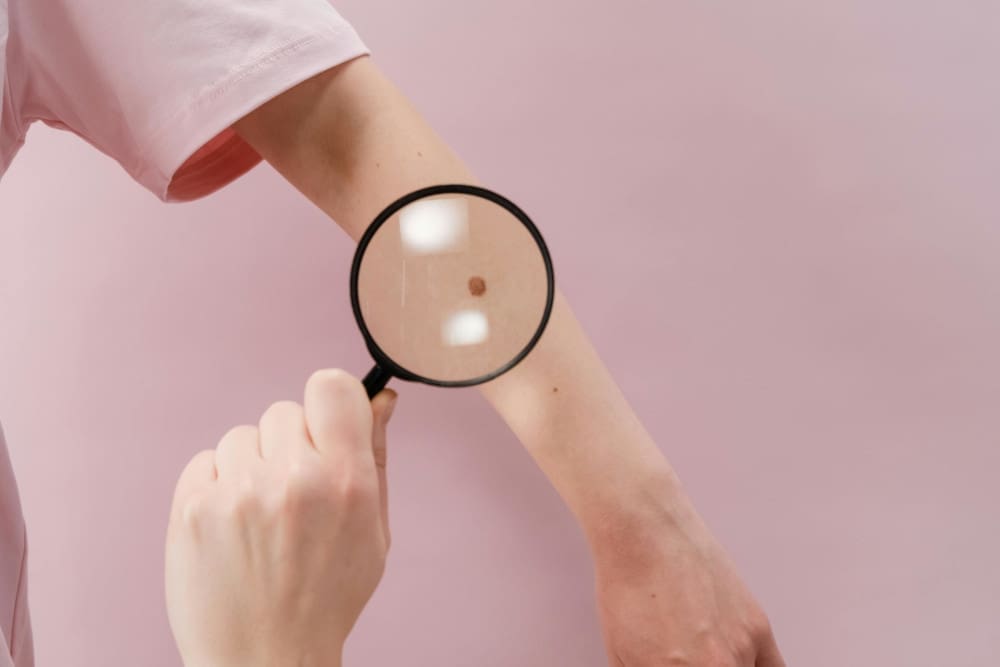
Along with basal cell carcinoma (BCC), squamous cell carcinoma (SCC) is one of the most common types of skin cancer. The main difference between the two is that SCC tends to grow and spread more quickly than BCC, making early detection and treatment extremely important.
Understanding your squamous cell carcinoma treatment options, including Mohs surgery, can help you make an informed decision on the best route of treatment, together with Dr. Dharia.
What Is Squamous Cell Carcinoma?
Squamous cell carcinoma is a type of non-melanoma skin cancer that forms in the squamous cells, which make up the outer layer of your skin. It is primarily caused by prolonged UV exposure from the sun or indoor tanning beds.
SCC often appears as scaly red patches, open sores or wart-like growths on the skin that may crust or bleed. Although not as aggressive as melanoma, squamous cell carcinoma can still grow and spread if left untreated, making early diagnosis and treatment essential.
How Is Squamous Cell Carcinoma Treated?
The best squamous cell carcinoma treatment option for you will depend on a number of factors, including the size, location and severity of the tumor, as well as whether or not you have ever had skin cancer before. In most cases, squamous cell carcinoma can be fully removed via a surgical procedure, such as excision or Mohs surgery.
Radiation therapy and other nonsurgical treatments can also be used to treat SCC, though these are often used in conjunction with surgery. Radiation therapy may be used on its own to treat SCC, particularly in patients for whom surgery is not an option.
Other nonsurgical treatments include cryotherapy, topical medications for superficial SCCs and electrodesiccation and curettage (ED&C), which scrapes away the tumor before applying electric current to destroy remaining cancer cells.
When Might Mohs Be Best?
Mohs surgery is considered the gold-standard for squamous cell carcinoma treatment in many cases, as it offers the highest precision and removal rates while preserving the most amount of healthy tissue compared to excision surgery.
During Mohs surgery, Dr. Dharia examines each layer of skin under a microscope before removing more, in order to ensure full SCC removal while removing the least amount of healthy skin as possible.
In particular, Dr. Dharia might recommend Mohs surgery when the SCC:
- Is located in a cosmetically-sensitive area like the face, neck or hands.
- Is considered high-risk for returning or aggressively spreading to other areas.
- Has already grown or spread to deeper areas of tissue.
- Has indistinct borders that may be easily missed with less precise techniques.
Next Steps
If you suspect you may have squamous cell carcinoma, the first step is to make an appointment with Dr. Dharia for a complete evaluation and diagnosis. If SCC cells are found, Dr. Dharia will explain in detail your various treatment options and will recommend the best course of action based on the specifics of your case.
Please do not hesitate to call our office at 805-484-2855 or contact us online with any questions or to schedule your appointment today.

Author: Dr. Daniel G. Kolder
Dr. Daniel G. Kolder is board certified by the American Board of Plastic Surgery. As a highly trained plastic surgeon serving Ventura County, he is best-known for his warm, easy manner, compassionate care, and beautiful, natural results.